


The Lesson Plan Diva is hosting a Behavior Plans and Classroom Management Linky Party...Click HERE to check it out!
I've only been teaching for four years, but in this short period of time, my classroom management style has changed drastically. My first year, I used a card pulling system, and my second year I used some counting techniques in addition to that. Half way through my second year, I stumbled upon some information about responsive classroom techniques and positive discipline on Proteacher. After trying out some new ideas, I have finally found my management style, and I love it!
Nowadays, my classroom management is centered around daily classroom meetings and problem-solving. My students learn to monitor and change their own behavior through role-playing, responding to literature, and lots of student-centered conversation about the way we want our classroom to be. We no longer use cards, clips, rewards, or punishments, and the result has been much less stress for me:).

At the beginning of the year, my students and I first talk about our hopes and dreams for the school year. We talk about the kind of classroom we want to have, and then we discuss a plan for creating that environment. We make our class rules through a series of discussions and brainstorming sessions. First, I have my students list all of the rules they think we might want to have in our room. Then, we go back and categorize the rules. Most of our rules fit under the same broad categories, so my rules are pretty similar from year to year. After giving each category of rules a title, we phrase the rules into "Our Class Promise," which is hung as an anchor chart and signed by everyone in the class (including me). The picture above is of our class promise from a few years ago--I wasn't as specific with it then.
Every day during our class meeting time, we read our rules together (this year, I'm hoping to add actions to the rules so they will be more easily remembered by my kinesthetic learners). Here is an example of my classroom's promise: We promise...to be safe and careful, to be kind and respectful in our words and actions, to do our best first grade work, and to make ourselves proud by doing the right thing! Notice how that last rule encompasses lots of possibilities:)
When we have problems in the classroom, I try to address them as respectfully as possible, and this can occur in a number of ways. Sometimes, I'll simply ask the child to remember our promise, and this will provide immediate correction. Sometimes, I'll ask a child to cool-down for a minute to reflect on his or her actions. This cool-down is not a punishment, but just a time to rethink, and the students are welcome to rejoin the class when they feel ready. Students sometimes go to cool-down without my asking--this works well for those who need a quiet time to reflect or avoid frustration. In solving behavior problems, I'll also sometimes ask a student if he or she wants the class to help him or her solve the problem, and we'll address it as a class during our daily meeting. The students practice "helping, not hurting," so this is the focus, rather than making the child feel bad. I also use logical consequences such as going back and walking when a student does something like running in the hall.


Here is what you do...talk to the parents and child about three small goals that you would like him or her to focus on. Also discuss a logical consequence that will occur if the child does not exhibit the particular behavior. Furthermore, discuss three rewards the child might like to earn if he or she reaches the goal. Record these items on the behavior chart. During class, monitor the child's behavior in regards to the goals and give him or her a smiley/sad face for every 30 minutes during the school day (I set a timer on the child's desk). In the first two weeks of using the plan, I ask the child to try for 50% achievement. If he or she is consistent in getting 50% smilies, we increase the goal to 75% for a few weeks, and then 95% for another couple of weeks. Each day the child reaches his or her goal, allow him or her to choose one of his or her rewards. I like to use free activities as rewards such as lunch with a friend, computer time, or extra centers time. The behavior plan is sent home each day and returned with a parent signature and comments as necessary.
Because this plan involves teacher effort in monitoring and recording the student behavior, I usually only use this plan with one or two children at a time for about a 2 month period, as needed. I try to remember that the goal is improvement and not perfection, and that it takes time for the students to learn new behaviors.
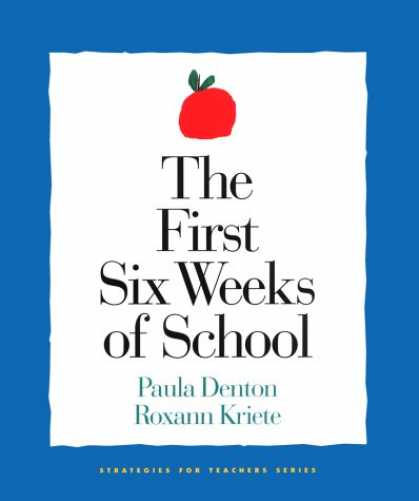
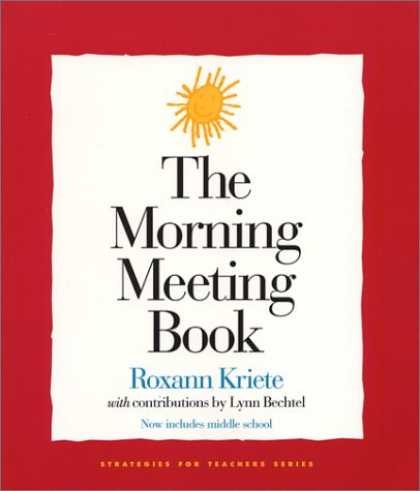
I know that was a ton of info at once, and really just a big overview, so if you want to learn more about classroom meetings, positive discipline, or responsive classroom techniques, see these wonderful resources, or feel free to ask specific questions and I'll do my best to answer! Also, if you'd like to use any of my documents, you are welcome to click on the pictures above to download them from google docs.
Favorite Responsive Classroom and Positive Discipline Resources:





Ok- last year I really wanted to do a class promise, but for the first 2-4 days of school, I had about half my class there and new ones coming in every day... I was waiting for them all to get there. Then I felt if I waited any longer there might be chaos! So I introduced my rules, wheel of choice, and penny reward system instead. It worked pretty well.
ReplyDeleteThis year I printed out some "First Grade Expectations" to put on the board (along with the wheel of choice). My fear is in our high traffic school I may have the same problem this year with kids not really showing up for a while...
Thoughts??
LJP - To help with our promise this year, I'm going to have my students first brainstorm all of the little rules and ideas they think we should follow in the classroom. Over the first few days, we will reread the list and add to it as we think of new ideas. We'll just work on following all of those little rules for those first days so it isn't chaotic. Later, we will categorize the rules and come up with one class promise that encompasses the more general rules. My timeline is probably going to be just brainstorming for the first week and then coming up with our official promise the second week. By then, most of your kiddos should be there, so they'd still be able to take part in the process. :)
ReplyDeleteCan you tell me more about your "class meeting agenda"? I'm intrigued!
ReplyDeleteChristina
Mrs. Bainbridge's Blog
Christina - First of all, I have been following you (if you can call it that) through your wonderful website and now your blog since I started teaching 5 years ago! I got a little starstruck when I saw your comment:). Our meeting agenda is pretty simple. We have a mini whiteboard near our meeting area that says "Meeting Agenda" at the top. Underneath the header is our "Character Word of the Week." That was one of my teammate's ideas. We simply put a word such as "respect" or "sharing" on the board, and we talk about that word all week in addition to reading books that model those positive words. Underneath the character word, I have two places where students can sign up for time during the meeting. Sometimes an individual will sign up with a general problem that we will discuss/solve/role play etc. during our class meeting. I always have the class brainstorm solutions to help with the problem and have the child who brought up the problem tell us which plan of action he or she is going to try. Other times, two students will sign up if they are having a disagreement and need help talking it out. I then help them talk it out either privately or in front of the group depending on the situaton. If no one puts any problems on the agenda, I will put a general topic on there that we will discuss. I really like it as it gives our meetings some focus, and it also allows me some think/prep time to deal with the problems:)
ReplyDeleteI love this idea! It seems like a wonderful way to help students become problem solvers. I need to add this to my schedule next school year.
DeleteLove the idea of waiting for the first week! I already printed out my expectations to go on our bulletin board, so we can do those the first week or so, then make the promise! Yay! :)
ReplyDeleteDo you know of any other way to have strats with school grade children?
DeleteI do a promise too! We also have a district behavior goal and we link it together: respect, responsibility and honesty. We spend A LOT of time working on it and our goal is to have a safe and fun classroom for everyone to learn in!
ReplyDeletehttp://firstgradejabber.blogspot.com
Thank you so much for sharing these! I just printed copies for all the kinder teachers at my school!
ReplyDeleteSally
http://fairydustteaching.blogspot.com/
I know you wrote this post a long time ago, but I was wondering when do you have your class meetings? Is it always in the morning and do you think it matters at what time of the day you hold the meetings?
ReplyDeleteMrs. H,
ReplyDeleteI just had one of those moments as a learner where everything just made sense. This how every classroom should be managed. The responsive classroom is an amazing program. How can we get families more involve in using these strategies at home? That would really help a lot of children.
Keep up the awesome work you do.
Brian
1/ CARLOS DE ASSUMPÇÃO - The biggest black poet in the history of Brazil author of the poem the National Anthem PROTEST fight the Afro-Brazilian Black Consciousness in conclusion completed 87 years of life. CARLOS DE ASSUMPÇÃO was born May 23, 1927 in Tietê-SP in last Friday completed 87 years of life with your family, friends and us of BLACK NATIONAL ORGANIZATION FOUNDED QUILOMBO ONNQ 20/11/1970 (And several entities and admirers congratulate the birthday 87 year old master black poet Carlos Assumption) had the proud honor and pleasure to call the historical person wishing happiness, health and Assunpção thank Charles for his giant work, especially the protest poem which for many is the biggest and most significant poem of Afro Brazilian National Anthem of blacks. "Protest" is the most emblematic poem of Brazilian Afros and a Black America, slavery in their pain and scars contemporary pragmatics of permanent unconsciousness high society perverse in the Poem "The Protestor" was released in 1958, in the joy of Brazil champion football, but there were improprieties and Brazilian people was poorly conditioned and today the Football World Cup in Brazil 2014 poem "Protest" by Carlos de Assunpção is more alive with the people in revolution to (Fall of the Bas. Brasil.tilha) reivindicatórias the demonstrations out of economic social justice of the Brazilian people awakening in the reflection of the protest alive.
ReplyDeleteMaster Milton Santos said the verses of protest and speech by Martin Luther King, Jr. in Washington, DC, the capital of the United States of America, August 28, 1963, after the March on Washington. 'I have a Dream "(I have a dream) were the two largest cries for freedom, rights, peace and justice of the American afros. Hundreds of journalists, critics and intellectuals in Brazil and everyone praises (Protest) (Demonstrating that black is powerful essence of the transformation of the ideals of the people) work eloquently extols the divider unquestionable waters of racism and the prevailing friendliness But Brazil's dictatorship and the media monopoly and manipulation of elites that dominate Brazil censor Protest Charles Assunpção poem that is our historic protest and reborn and expresses congregate and blacks and all the oppressed, wronged this nation that makes the Cup world spending billions to an illusion of a month that can be sad or happy for the Brazilian people that sometimes do not even have or saves cents for basic needs and even for their survival and their. In Brazil
.
Black Organization National Quilombo ONNQ 20/11/1970 -
quilombonnq@bol.com.br
.
ReplyDeletePoem. Protest Charles Assunpção
Even turn their backs
My words of fire
Do not Stop Yelling
Will not stop
Do not Stop Yelling
Gentlemen
I was sent to the world
To protest
Tinsel lies nothing
Nothing will shut up
Gentlemen
Behind the wall the night
Without anyone noticing
Many of my ancestors
Already long dead
They meet at my house
And put us to talk
About bitter things
About shackles and chains
Which in the past were visible
About shackles and chains
Which at present are invisible
Invisible but existing
The arms in thought
In steps in dreams in life
From each of the living
Together with me foundlings of Homeland
Gentlemen
The blood of my grandparents
That runs through my veins
Are cries of rebellion
One day maybe someone will ask
Moved before my suffering
Who is screaming
Who regrets so
Who is
And I will answer
Me Brother
Brother tu me desconheces
I'm the one who had become
Victim of men
I'm the one who, being a man
It was sold by men
Auction in the public square
It was sold or exchanged
Like any instrument
I'm the one who planted
The sugarcane and coffee plantations
And watered with the sweat and blood
One who held
About blacks and strong shoulders
The progress of the country
What thousand suffered torture
What cried pointlessly
What gave everything he had
And nowadays has nothing
But today is not scream
From what has passed
What happened is past
My heart has forgiven
Today my brother cry
It's because after all
Justice does not come
I am who I am screaming
The cheated in the past
Deprecated in this
I am who I am screaming
Am I my brother that
Who lived in prison
Who worked in prison
He suffered in prison
For it to be built
The foundation of the nation
The foundation of the nation
Has the stones of my arms
Is the lime of my tears
So the nation is sad
It is very sad but great
It is among such people sad
Brother I'm the saddest
My story is told
With inks bitterness
A day in cheers of joy and roses
Threw me suddenly
The prison where I was
For a wider prison
It was a Trojan
The freedom they gave me
There were snakes future
Under the cloak of enthusiasm
One day I suddenly threw
How bagasse
How straws coffee
How useless thing
That was no good for anything anymore
One day I suddenly threw
In the gutters of the street helplessness
Under ovations and roses of joy
Always dreamed of freedom
But they gave me the freedom
Was more illusion that freedom
Brother's me who cries
I have strong reasons
Brother's me who cries
I need more
Screaming that breathing
But brother learns
Piety is not what I want
Pity I do not care
Weak ask mercy
I want best thing
I do not want to live
In the basement of society
Not to be marginal
I want to go everywhere
I want to be well received
Just humiliations
My soul is tired
I want the sun belongs to everyone
Or catch everything I want
I cry all night
How scream volcanoes
As screaming gales
As cries the sea
And death shall have no force
To make me shut up.
Black Organization National Quilombo ONNQ 20/11/1970 -
quilombonnq@bol.com.br
Excellent post . Just to add my thoughts , you are interested in a a form , my boss filled a blank version here http://goo.gl/Ms4ebj
ReplyDeleteWonderful things to solve the problems and have techniques or ways to manage the classroom.
ReplyDeleteThank you for your suggestion. I love it.
"Dapatkan SUPER BONUS NEW MEMBER 150% dalam permainan dan mainkan permainan kesukaanmu hanya dalam 1 user id. Ikuti juga promo menarik lainnya yang kami sediakan hanya di bbet99.fun . 100% TERPERCAYA.
ReplyDeleteBOLA ONLINE
Agen Bola
Taruhan Bola"
ไม่ดูไม่ได้แล้วหนังออนไลน์แสนสนุก ดูหนังใหม่เรื่อง Victoria & Abdul ราชินีและคนสนิท (2017) ที่บ้านได้เลยทที่
ReplyDeletehttps://www.doonung1234.com/
This comment has been removed by the author.
ReplyDeletepg slot
ReplyDeletepgslot
pgslotgame
ทดลองเล่นสล็อต
Going through divorce with the partner you love is like been in hell, my husband filed for a divorce without giving me reasons. I was totally down for I had no idea of what was happening and I tried to confront him to know what led to such action but he didn't give me listening ears.. I tried getting to know what happened through his family members but that didn't work either and this time was going mad about everything till I searched for help online and I came across Lord Zakuza contact number +1 (740) 573 9483 and I messaged him to let him know what I was going through and Lord Zakuza encouraged and promised to help me with his powerful spell and within 48 hours after contacting Lord Zakuza and followed all his instructions, my attorney called me to get me informed that the divorce case has been cancelled and after 30 minutes, I got a call from my husband pleading and begging for forgiveness and right now we are back together with so much love and care.
ReplyDeleteFor many teachers, it is a difficult component of teaching. Some teachers have left the profession due to problems in this area.
ReplyDeleteWrite My Assignments For Me no matter how unwilling you are, being a student, Write My Assignments For Me you have to comply with the academic regulations and submit the assignments on time
ReplyDelete